
Papua New Guinea National Tourism Policy Launched
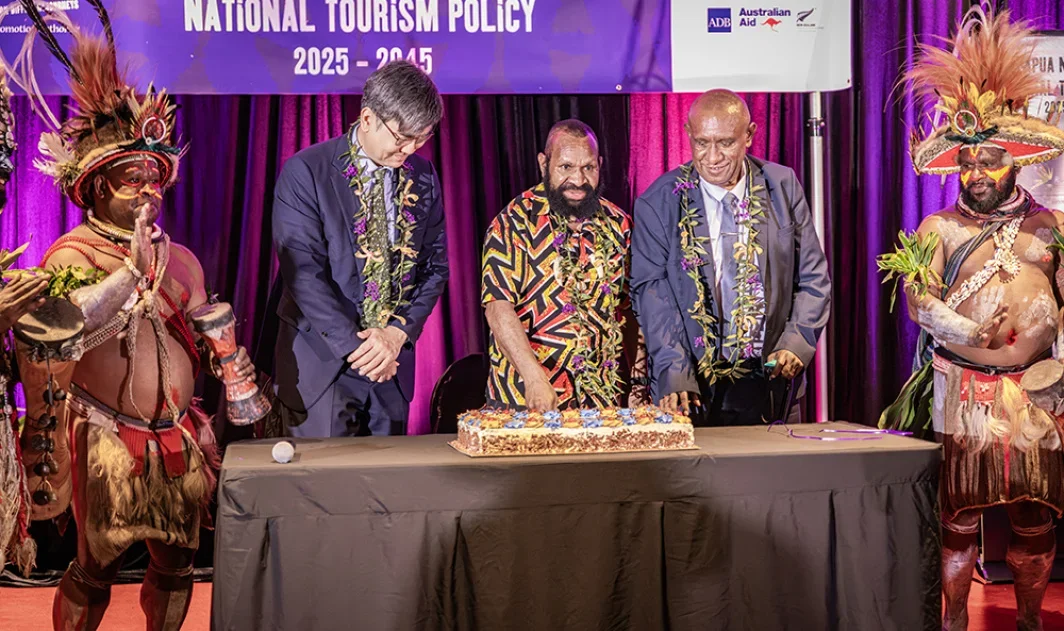
New Guinea, December 1, 2025 – The Papua New Guinea Tourism Promotion Authority (TPA) officially launched the Papua New Guinea National Tourism Policy (NTP) 2025–2045 on Tuesday 18 November at the APEC Haus in Port Moresby.
The launch signifies the culmination of more than a year of extensive nationwide consultations across the public and private sectors, academia, non-governmental organizations, and community representatives.
Developed with the support from Pacific Private Sector Development Initiative (PSDI), an Asian Development Bank technical assistance program undertaken in partnership with the governments of Australia and New Zealand, the review of the NTP 1995 was conducted in December 2022, followed by Key Informant Interviews and regional consultations in 2023. An Issues Paper was developed to guide the policy drafting and a National Tourism Policy Stakeholder Validation workshop was facilitated in December the same year. Following the validation, the draft NTP 2025- 2045 was put through numerous rounds of technical vetting before obtaining endorsement from the National Executive Council in August 2025.
The NTP 2025-2045 serves as a guide for whole-of-government efforts to achieve a multistakeholder shared tourism vision. It will be implemented through the Tourism Sector Development Plans (TSDP) convened by the Authority every five years, outlining specific agreed medium term strategic actions for all public, private and community stakeholders. The NTP 2025-2045 is framed around Policy Areas by Cross-cutting Themes -1) Environmental Sustainability, 2) Cultural Heritage Preservation and Promotion, 3) Empowerment of Resource Custodians, 4) Inclusive Economic Growth and 5) Resilience Building.
Policy Areas by Tourism-enabling Functions – 6) Tourism Sector Governance, 7) Air Connectivity, 8) Hub-based Destination Development, 9) Niche-based Visitor Experience Development, 10)
Investment in Tourism Supply, 11) Public Infrastructure and Services, 12) Tourism Industry Standards, 13) Workforce Development, 14) Destination Marketing and 15) Visitor Entry and Safety.
TPA’s CEO, Eric Mossman Uvovo, described the policy as a transformative roadmap for tourism in Papua New Guinea.
“The launch of the National Tourism Policy marks a new chapter in our tourism journey as a nation.
This policy provides the strategic direction needed to position Papua New Guinea as a leading nation in tourism, a country that celebrates its rich cultural diversity, pristine natural environment, and authentic adventure experiences,” said Uvovo.
Mr. Uvovo emphasized that the policy’s implementation will focus on strengthening partnerships between government agencies, provincial authorities, tourism operators, and local communities.
He also highlighted the importance of building resilient tourism infrastructure, promoting investment, and supporting micro, small, and medium enterprises (MSMEs) within the tourism industry.
The launch event was officiated by the Minister for Tourism, Arts and Culture Honorable Belden Norman Namah and attended by senior government officials, industry leaders, development partners, and representatives from across the country.
The PNG National Tourism Policy 2025–2045 provides a long-term vision to ensure that tourism contributes meaningfully to national development, creates employment opportunities, supports cultural preservation, and enhances the well-being of communities throughout the country.
For more information and a copy of the PNG NTP 2025-2045, please email: psp@papuanewguinea.travel
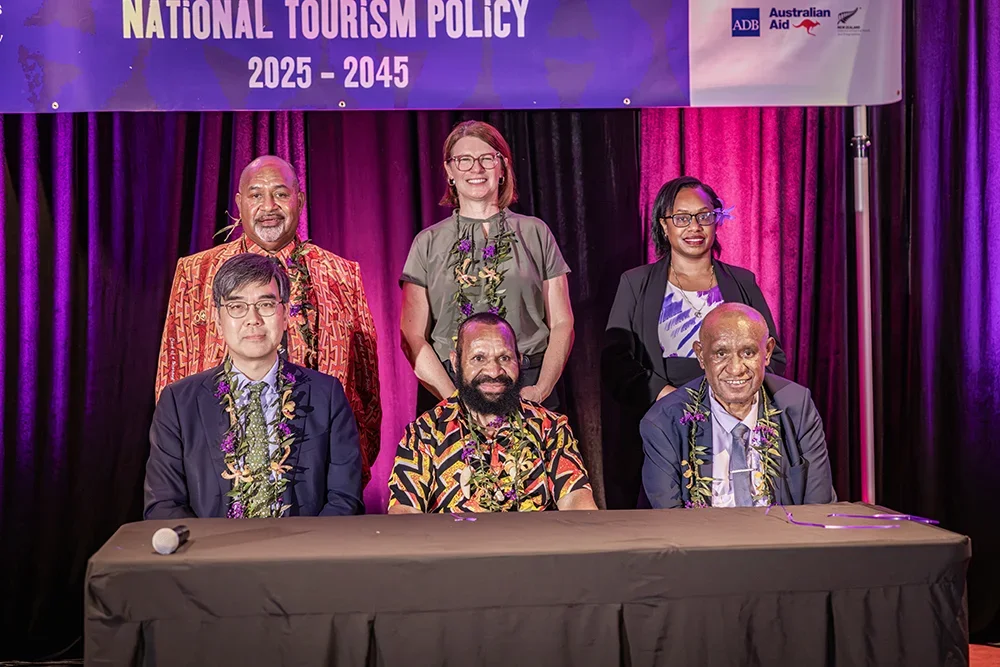
Standing L-R: Deputy Board Chairman, Captain. James Pima, PSDI’s Tourism Expert, Jennifer Bartlet and TPA’s Executive Manager for Policy & Strategic Planning, Ingrid Kuman. Seated L-R: ADB’s Port Moresby Resident Mission and Officer in Charge. Soon Change Hong, Minister for Toursim, Arts & Culture, Hon. Beldan Namah and TPA’s CEO, Eric Mossman Uvovo