
Pata India Masterclass Puts Social Media in Focus
The PATA India Chapter held its fifth Leadership Masterclass in Delhi on 29 September, featuring Sarah Mathews, CEO, eTourism Frontiers, on social media’s influence on travel decisions. The session explored how destinations and travel businesses can engage younger generations, adopt artificial intelligence, and develop more personalised experiences.
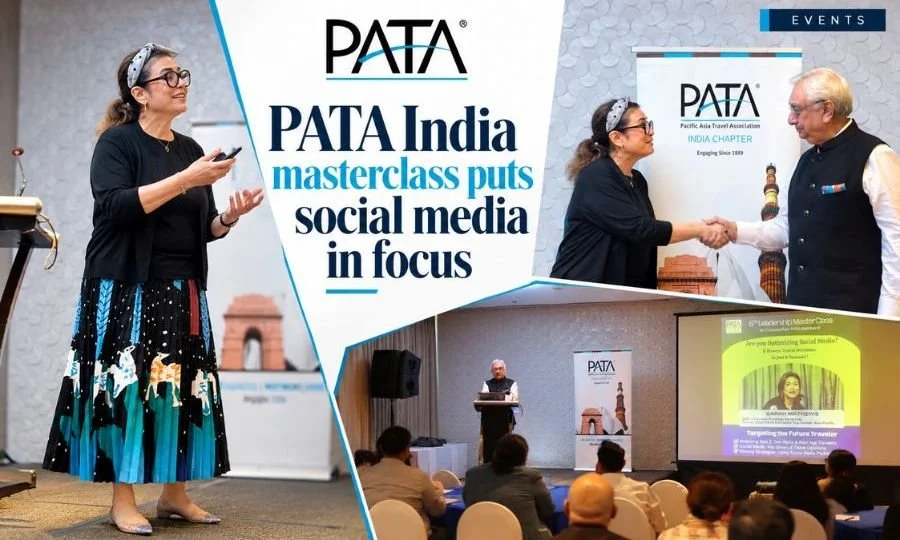
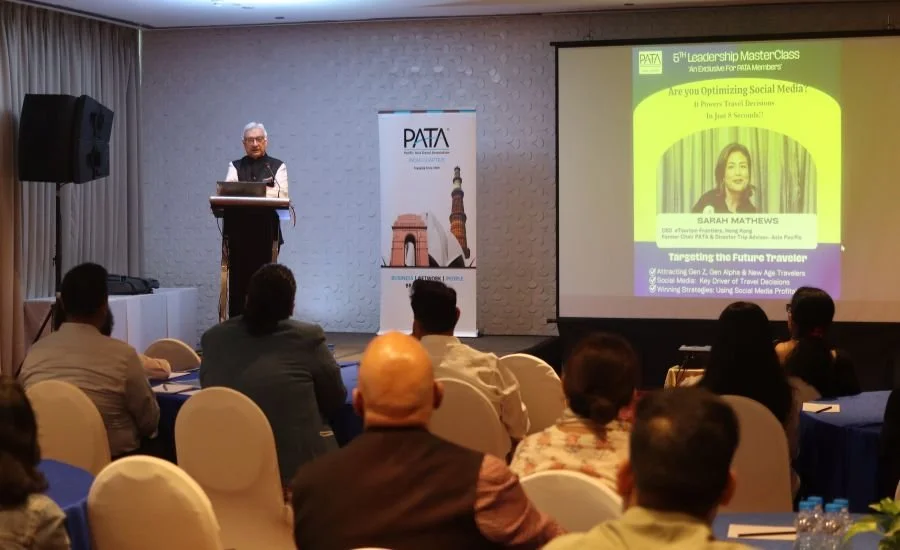
Titled ‘Are You Optimising Social Media?’, the exclusive session for PATA members examined social media as a key driver of travel inspiration and purchasing decisions, with a focus on Gen Z, Gen Alpha, and new-age travellers.
“Even though we know the duration of planning, the seeding of inspiration starts very early on,” Mathews said. “You’re not capturing today’s audience by showcasing the destination using the right methodologies and formats, targeting the younger generation. You’re building up a new group of clientele.”
She urged the travel industry to focus on younger consumers, noting that millennials and Gen Z are already spending, while Gen Alpha is approaching the workforce. “It’s really critical that we start paying attention to the future generation of travellers,” she said.
India needs consistent destination messaging
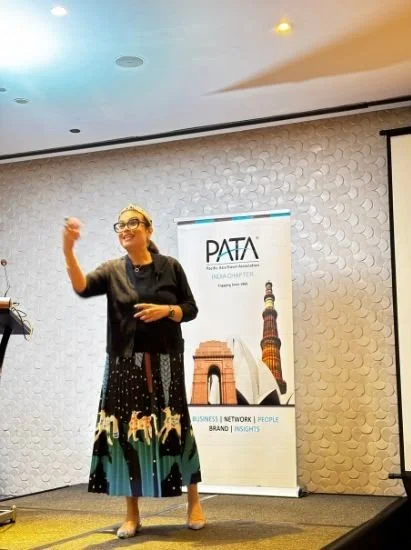
India’s inbound tourism potential, Mathews identified international connectivity disruptions and inconsistent destination messaging as challenges. Referring to the impact of the war in Iran, she said, “If you’re coming over long haul, particularly from the West, you’re most likely going to have some kind of stopover, so that already is going to impact this year.”
She also called for an “always-on voice” in destination marketing, supported by a more focused approach to communicating India’s diverse tourism offerings.
“India is huge. If you look at just one state, there are thousands of things to do, let alone a country,” she said. “It’s about speaking with a unified voice, making sure that you’re getting the traveller to know that across the whole of India there are anything from winter sports all the way through to wildlife safaris, adventure, experiential, ultra-luxury, luxury.”
Mathews cautioned against presenting every tourism product to every audience, advocating instead for destination positioning aligned with traveller interests. Citing New York as an example, she said, “When you go to New York, you know it’s about the food, the city, the vibe of the city, the architecture. It doesn’t really push itself as a slow city, a wellness city. They have those things, but that’s not what they focus on.”
She added, “It’s about reviewing and auditing every product that you have and then aligning that with the audience effectively.”
AI to support, not replace, travel professionals
The masterclass also examined technology adoption and concerns among travel agents that AI could replace their roles. Mathews compared technology to the widespread adoption of smartphones, emphasising that its value depends on how businesses use it.
“I am a great believer in using AI technology, except when it comes to tourism imagery and video,” she said, advocating authentic photography and destination content. “The destination is beautiful enough already.”
She said AI could be useful for small businesses seeking social media trends, as well as larger organisations analysing visitor data and managing operations. “AI and helping you with data crunching is very, very useful. How many visitors did I have last month? Where were they from? That is useful information because it helps you manage whether it’s staffing or whether or not you need to change the capacity.”
Mathews also highlighted changing consumer expectations around convenience, including mobile bookings and digital boarding passes, as reasons for businesses to embrace relevant technology.
“The one thing I’ll say is, and I think tourism is very safe in this aspect, it will never remove the human touch,” she said, while acknowledging that technology would bring natural changes to roles across the industry.
Personalisation and ultra-luxury among emerging trends
Looking ahead to the next five years, Mathews identified personalisation and private experiences as major travel trends, driven in part by social media’s influence on traveller aspirations.
“People want their own experience. That’s driven primarily with social media. Everyone wants to look like they found the secret location, the secret place, the lesser known,” she said.
She expects customised tours, experiences, and hotel stays to gain further importance, supported by data, AI, and destination knowledge. “That personalisation of the tour and the experience and the hotel is exactly what travellers want, and that’s going to be coming from a combination of data, AI, as well as the knowledge within the destination.”
Mathews also pointed to growing demand for ultra-luxury travel, distinguishing it from the broader luxury segment. “Tourism is here to stay and will always be what people want and need,” she said, adding that travel brings happiness and excitement to consumers.
Concluding her remarks on India’s tourism potential, she said, “India is a wealth of places to visit. It’s a myriad of amazing sites, colours, and wonderful experiences, so I can’t wait till I come back again.”