
Why Songkhla Should Be On Your Foodie Radar

A UNESCO-recognised crossroads of Southern Thai, Chinese, and Malay flavours where street food, heritage kitchens, and seafood terroir tell a living history
Bangkok, 17 December 2025 – While Bangkok boasts Michelin stars and Phuket has its trendy beach clubs, a quiet, aromatic revolution is underway in Thailand’s deep south. Songkhla Province, a “City of Two Seas,” is finally stepping out of the shadows as a heavy hitter on the global food map. Recently integrated into the UNESCO Creative Cities Network for Gastronomy, this province, with the sleepy, historic Songkhla Old Town and the neon-lit, bustling hub of Hat Yai, offers a culinary narrative as complex as its history.
For a foodie, Songkhla isn't just a stopover; it's a pilgrimage. The cuisine is a masterful "triple threat" of influences: the fire of Southern Thai spices, the refined techniques of Hokkien and Teochew Chinese settlers, and the aromatic depth of Malay-Muslim traditions.
Good morning, Hat Yai
The day in Songkhla starts early, and if you aren't at a marble-topped table by 7:00 AM, you're doing it wrong. In Hat Yai, breakfast is synonymous with Dim Sum. Unlike the carts of Hong Kong, southern Thai dim sum is a vibrant, DIY affair. You go to a massive steamer station, pick your small metal saucers of raw dumplings, and wait for them to be steamed to order.
But the real local legend is on Nang Ngam Road in Songkhla Old Town: Khao Stu (Stew Rice). This dish is the ultimate edible proof of Songkhla's multiculturalism. It's a pork stew that tastes like a British Sunday roast met a Chinese five-spice master and a Thai chili-paste wizard. Served at legendary spots like Kiat Fang, the broth is light yet savory, paired with a vinegar-chili dipping sauce that cuts through the richness of the pork belly.
Snap, crackle, and pop
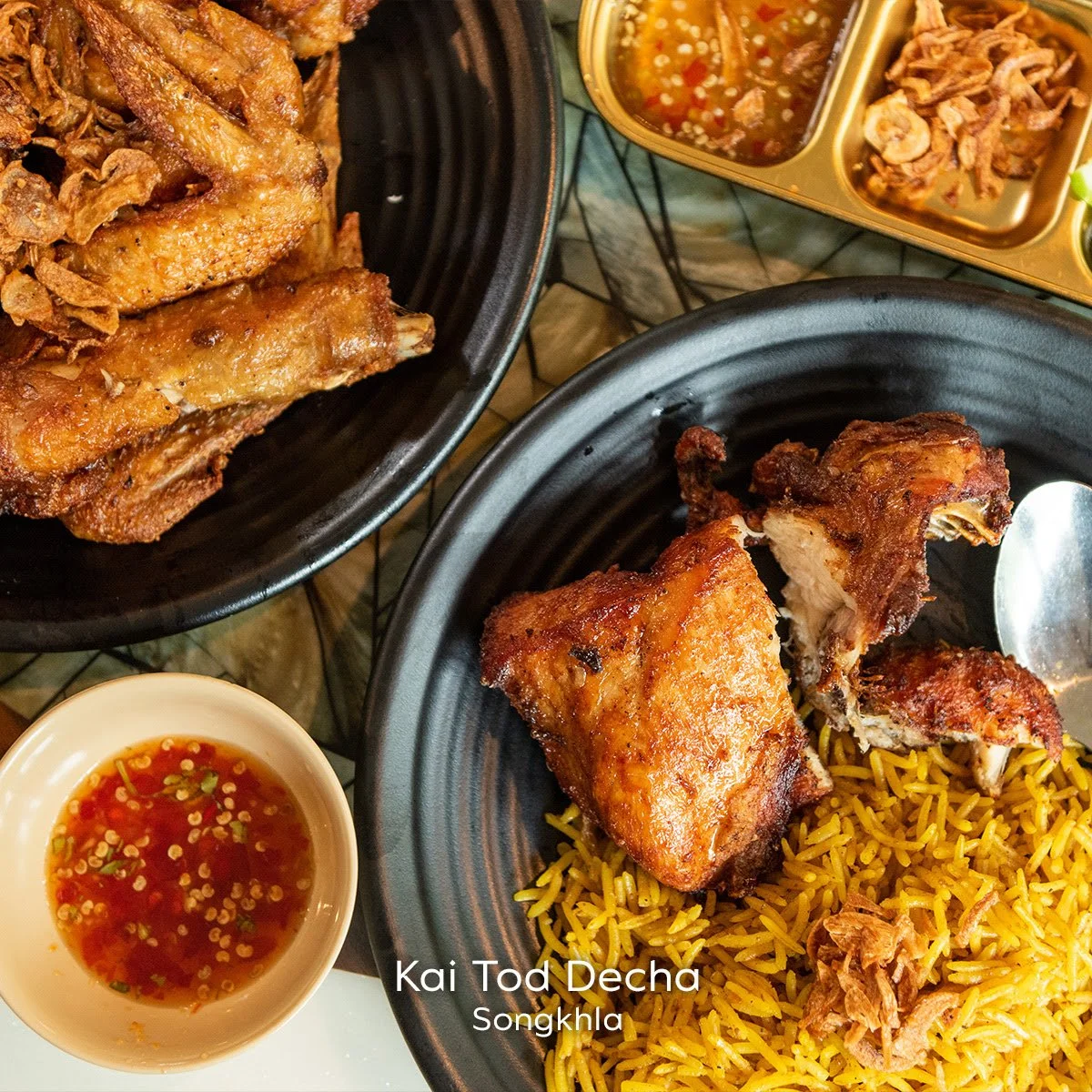
No gastronomy tour of this province is complete without the undisputed king of Thai street food: Hat Yai Fried Chicken (Kai Thot Hat Yai). What sets it apart isn't just the marinade, a punchy blend of coriander root, garlic, and white pepper, but the fried shallots. A mountain of crispy, golden shallots is piled onto the chicken, served with sticky rice. It's a textural masterpiece: the skin shatter-crisp, the meat steaming and tender, and the shallots providing a sweet, nutty crunch.
For a more specialized local delicacy, look for Khai Khrop (Steamed Egg Yolks). From the fishing communities of Songkhla Lake, this "Geographical Indication" (GI) dish features two duck egg yolks cured in salt, then steamed in their shells until they reach a fudgy, jammy consistency. It's the Thai equivalent of a high-end salted egg yolk, but richer, creamier, and uniquely "Songkhla."
Sea to Plate
Songkhla's geography, between Songkhla Lake, a brackish lagoon, and the Gulf of Thailand, means the seafood is unparalleled.
Khao Yam (Southern Rice Salad): This is edible art. A mound of blue-tinted rice, colored by butterfly pea flowers, is surrounded by finely shredded kaffir lime leaves, lemongrass, long beans, and toasted coconut. The soul of the dish is Nam Budu, a fermented fish sauce that provides a salty, umami backbone.
Sea Bass from Ko Yo: The lake's brackish water produces sea bass, Pla Krapong, known for its firm, sweet flesh and lack of muddiness. Whether steamed with lime or served in spicy Gaeng Som, Southern Yellow Curry, it is the gold standard of local protein.
The Sweet Ending
To finish, return to the Old Town's narrow lanes for Jar Ice Cream (Aitim Ong). Served in a vintage terracotta jar, this coconut milk ice cream is often topped with a raw egg yolk that freezes instantly against the cold cream, creating a rich, custard-like texture. For something more traditional, Ban Chong Dee offers Thong Ek, delicate gold-leaf-topped wheat-flour dumplings once reserved for royal ceremonies.
Why Now?
Songkhla is in the "Goldilocks" phase. It has the infrastructure of a modern destination, including a burgeoning café culture in Portuguese-style shophouses, but has retained the authentic grit and soul of a port town. The 2026 travel season is seeing a surge in "food-mapping" tours that take travelers from the night markets of Hat Yai to the heritage kitchens of the lakeside villages.
In Songkhla, you don't just eat to get full; you eat to understand how centuries of trade, migration, and geography can simmer together into a single, perfect bowl of soup.