
Building Connections that Matter: Redefining Value in the Next Generation of MICE
Authored by:
Lizam Dorji
PATA Face of the Future 2026 Grand Winner & Chief Executive Officer, MICE Bhutan
A Humbling Recognition
Kuzuzangpo la. I am Lizam Dorji, currently serving as the Chief Executive Officer of MICE Bhutan. Receiving the PATA Face of the Future 2026 award is an unexpected and immense honour, and I want to express my deepest gratitude to PATA, the panel of independent judges, and my colleagues who have supported my path.
I accept this recognition not as a personal achievement, but as a shared milestone for the many young tourism professionals across the region who work quietly and passionately every day to shape a more meaningful future for our industry. Tourism is never built by a single individual; it thrives on collaboration, shared values, and a collective commitment to the communities that welcome the world. This platform belongs to all of us who believe that travel can be a powerful catalyst for positive change.
Seeds of Purpose: A Lifelong Commitment
For me, sustainability and social responsibility are not modern industry buzzwords or corporate policies; they are values that have guided my life for as long as I can remember. Growing up in Bhutan, I was introduced early to the philosophy of Gross National Happiness; the belief that true progress must balance economic growth with cultural equity and environmental care.
As a student, this manifested in simple, local ways: spending weekends volunteering at schools for disabled children and participating in community cleaning campaigns. Later, while pursuing my university education in Thailand, I had the opportunity to work on projects alongside the United Nations Environment Programme (UNEP). These early formative experiences solidified my conviction that whatever career path I chose, it had to be a vehicle for doing good.
When I entered the professional world, I spent over five years working in Thailand within one of Southeast Asia's leading hotel and convention operations. Managing high-level events, ranging from large-scale corporate conventions to forums for the United Nations and the Bill & Melinda Gates Foundation, provided me with an invaluable operational foundation. I learned the complex mechanics of high-volume business tourism. Yet, the most profound lesson I took away was that business events are far more than logistical schedules or filled hotel rooms. They are gatherings of human intellect, innovation, and capital. Witnessing that potential inspired me to return home to Bhutan. I wanted to take the international knowledge I gained and use it to build something foundational that stayed true to our national identity.
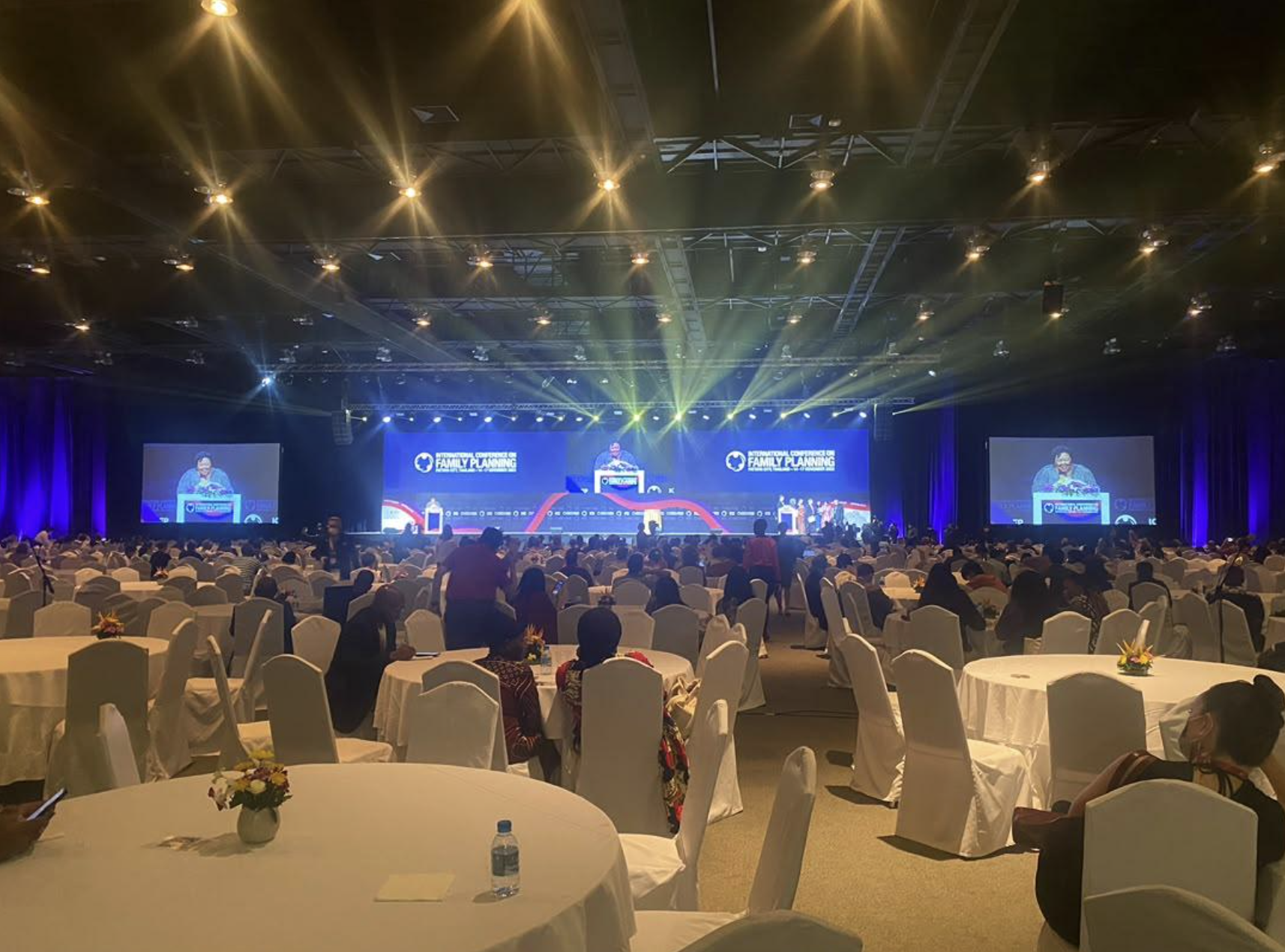
International Conference on Family Planning (ICFP) Main Conference Hall at Pattaya Exhibition and Conference Center (PEACH).
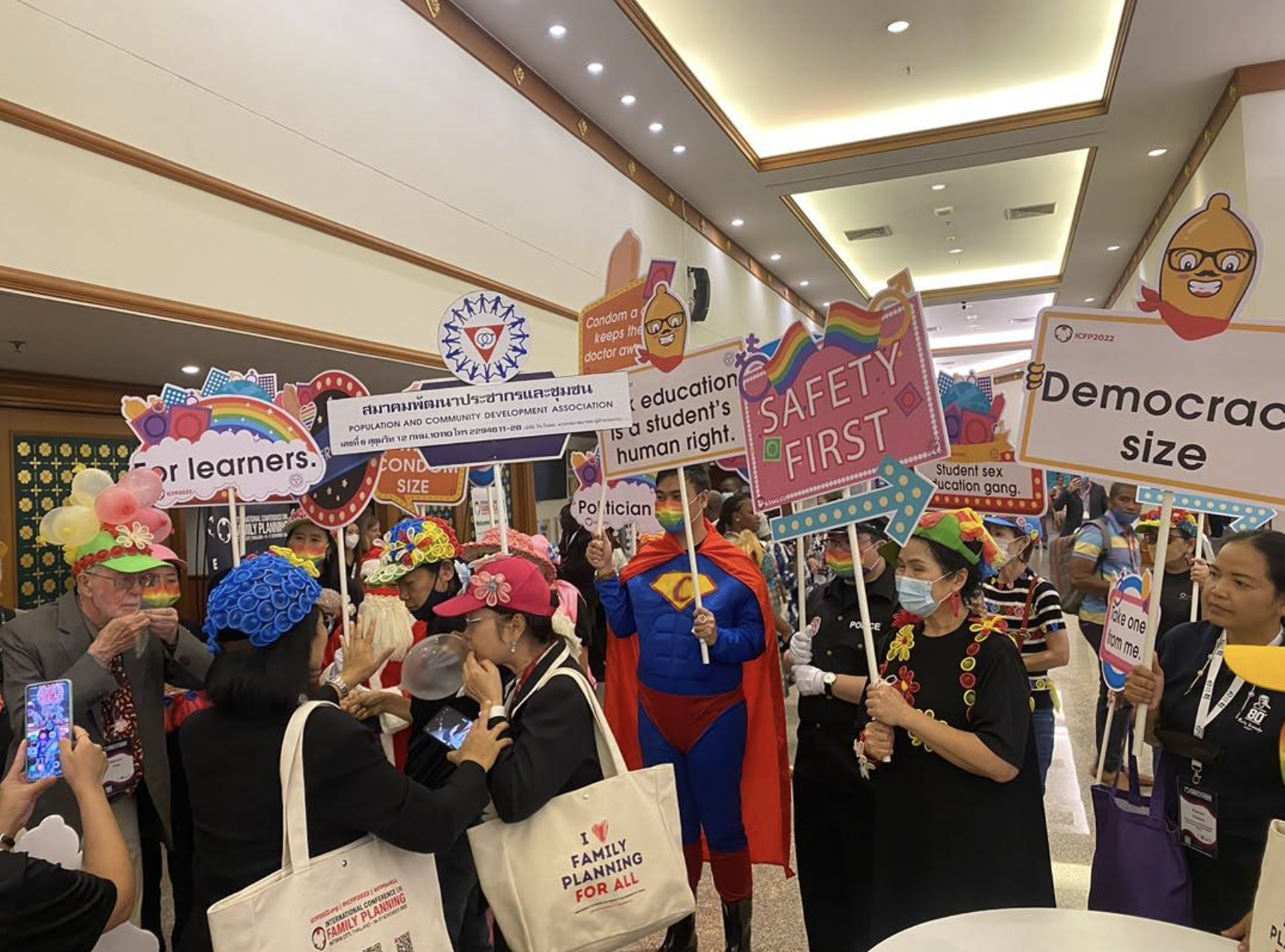
ICFP March for Rights.
Redefining Business Events in Bhutan
Today, leading MICE Bhutan presents a deeply rewarding challenge. Because the Meetings, Incentives, Conferences, and Exhibitions (MICE) sector in our country is still in its infancy, we have a rare, beautiful advantage: we are completely unburdened by legacy models of mass tourism. We have a blank canvas to define what business travel means from a sustainable perspective.
Conventionally, business events are associated with sterile boardroom spaces and rigid itineraries. Bhutan allows us to offer an entirely different narrative. Here, a corporate retreat is interwoven with a meaningful dialogue on mindfulness, or a conference schedule may incorporate the living culture of our kingdom. We believe that every corporate gathering should leave a lasting legacy long after the participants have returned home.
To translate this into action, we partnered with the Youth Development Fund to plant 888 flowering trees annually over three years, establishing a total of 2,664 native trees across Bhutan to quietly support our biodiversity. In tandem with environmental conservation, protecting our heritage is equally vital. In partnership with the Department of Culture, we support the revitalization of three nationally significant museums, transforming them into living cultural hubs that engage corporate visitors and local youth alike.
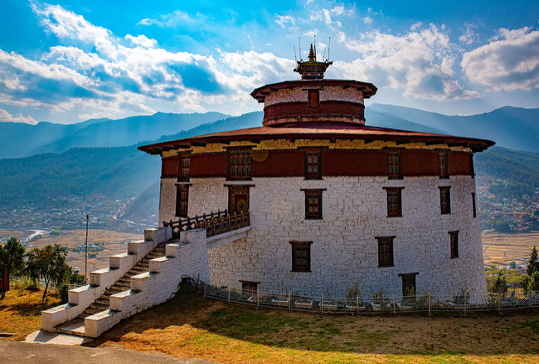
The National Museum of Bhutan (Photography done as part of MICE Bhutan’s Building Fund for the Museums of Bhutan Initiative)
The Fabric of Community
Beyond large-scale institutional projects, we believe the true success of tourism must be felt at the grassroots level. True impact means ensuring that international event budgets directly support the guardians of our culture.
This philosophy drives us to intentionally integrate local communities into our corporate programs. We work to support local women weavers and small-scale tea cultivators, providing them direct access to global markets. We collaborate with youth artists, including traditional Thangkha painters and wood carvers, ensuring their ancient crafts remain viable careers in a modern economy. Even the spiritual heart of Bhutan is woven into our business model; we support local monks who share the intricate, sacred arts of sand mandalas and Bhutanese astrology with delegates seeking deeper insight. Furthermore, our commitment to well-being extends to the domestic environment, where we quietly support local nunneries and dog shelters to care for those in need.
Success cannot be measured by arrival statistics alone; it must be measured by how fiercely we protect our heritage and support our communities.

Women Weaving Traditional Bhutanese Textile (As part of MICE Bhutan’s support for Empowering Rural Women in Bhutan)

Traditional Bhutanese Astrology Reading (As part of MICE Bhutan’s support for Pangri Zampa School of Astrology)
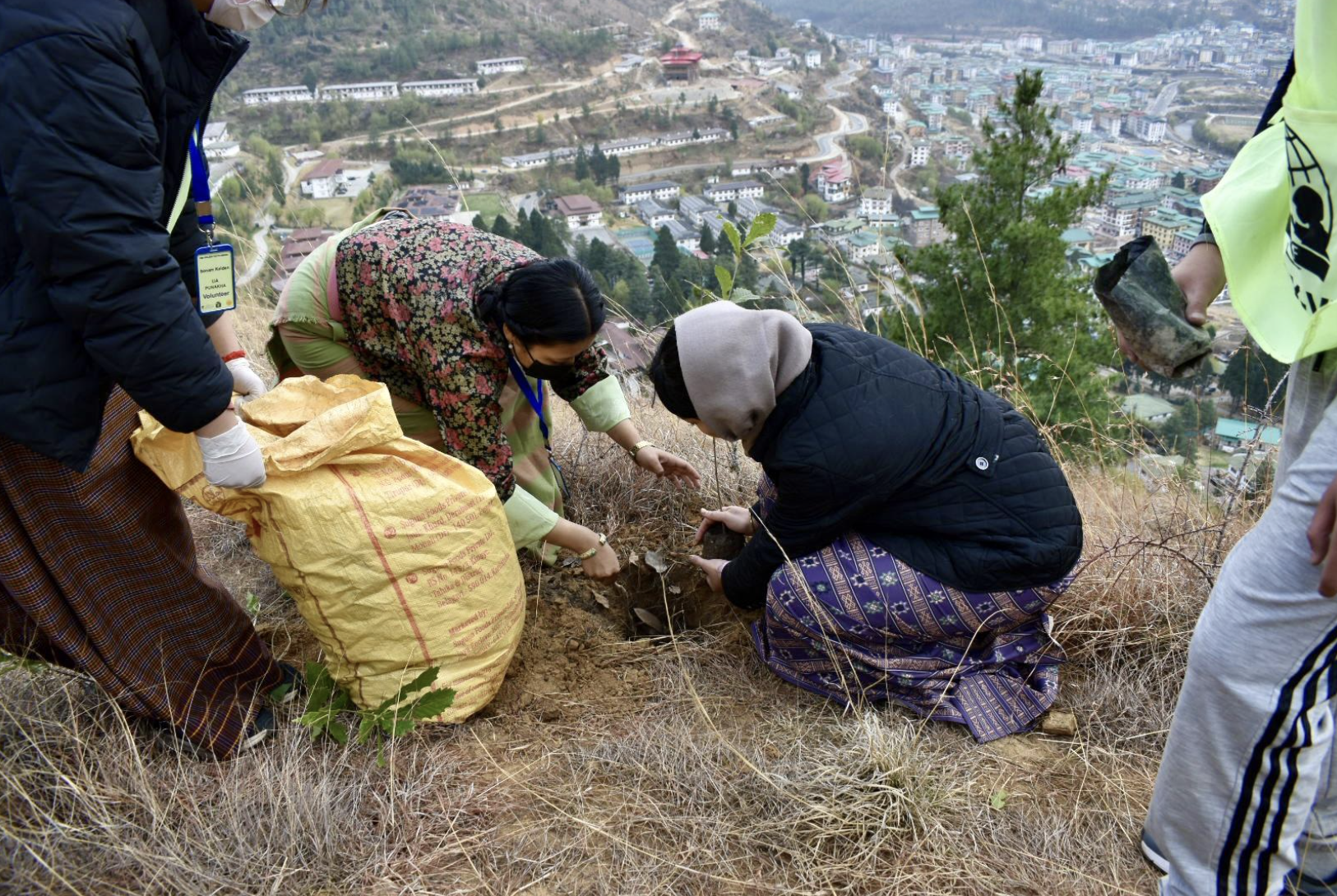
Tree Plantation with the Youth Development Fund Program (As part of MICE Bhutan’s 2664 flowering trees Initiative)
Collaboration and the Vision Ahead
If my professional journey has taught me anything, it is that tourism only succeeds when we work together. Meaningful alignment between government frameworks, private enterprise, local communities, and international bodies like PATA creates an impact far greater than any single organization could achieve independently. True leadership in this landscape requires us to master the art of listening to the unique stories and vulnerabilities of our hosts.
The future of the Asia-Pacific tourism industry will be defined by the choices we make today. As we integrate new digital tools and adapt to changing traveler expectations, our primary responsibility must be protecting the cultural authenticity and environmental integrity that make our destinations unique. Growth must never come at the cost of identity.
My hope is to see MICE Bhutan serve as a gentle, working example of how business travel can drive sustainable development across our region. Beyond our borders, I hope to inspire young professionals to look at this industry not merely as event management, but as a profound platform for nation-building. The next generation of tourism leaders will not just market destinations; they will help protect and shape them. I look forward to learning alongside my peers at the upcoming Youth Symposium as we quietly build a more purposeful future for travel.
Thank you and Tashi Delek.