
Algorithms, Alliances, and Authentic Roots: Key Takeaways from PTM 2026- Part 1
As tourism across the Asia-Pacific region transitions into a new era, industry leaders, policymakers, and innovators gathered to chart the path forward. The conversation made one thing clear: tourism is no longer viewed merely as an isolated commercial sector. Instead, it has become a central socioeconomic policy tool embedded deeply within national economic planning, international diplomacy, trade negotiations, and the broader consumer lifestyle economy.
While underlying baseline consumer demand across Asia remains robust, the travel sector is navigating complex external headwinds. Geopolitical volatility, armed conflicts, trade protectionism, climate events, demographic aging, and volatile exchange rates continue to challenge long-term operational planning.
From navigating macro-level economic headwinds to leveraging agentic AI and empowering indigenous communities, the discussions yielded crucial insights into how destinations and businesses can build a resilient, purposeful, and sustainable future.
1. Evolving Consumer Behaviour and the Interregional Lifestyle Economy
Consumer behaviour across Asia is undergoing a structural shift driven by the "Asia for Asia" momentum, where travel is tightly interwoven with regional pop culture and lifestyle trends.
The Interregional Lifestyle Dynamics

Olive Young in Seoul, one of Korea (ROK)’s leading beauty and cosmetic stores.
As highlighted by travel analyst Gary Bowerman, tourism no longer exists as an isolated sector but functions within a dynamic consumer lifestyle economy.
"We hear phrases like 'emotional consumption' and 'the joy economy.' What we're talking about is a real shift in how people perceive travel, lifestyle, and culture, and how they want to enjoy that when they travel." — Gary Bowerman
The Fallacy of Static Categories: Bowerman cautioned against trying to codify travel behaviours into static buckets. In an on-demand, e-commerce era—particularly among younger Chinese demographics—consumer trends evolve and pass rapidly. Attempting to rigidly follow consumer travel trends in Asian markets will simply cause destinations to be outpaced. (Read more about younger generations’ travel behaviours)
Lifestyle Drivers: Interregional journeys are driven by evolving cultural phenomena including K-beauty, C-beauty, anime, plush collectibles, soft power initiatives, QR-code payment ecosystems, and more.
Hyper-Value Sensitivity & Short Lead Times: Mid-market consumers display hyper-sensitivity to currency swings (Japanese Yen, Korean Won, Indonesian Rupiah), while unpredictable supply conditions lead to shrinking booking windows. (Read more about Asian destination-specific booking behaviours)

Deep Dive: Japan Outbound Tourism Snapshot 2027
Presenting JTB's market snapshot, Dr. Temesgen Assefa provided a compelling analysis of changing post-pandemic consumer priorities in Japan. Having reached 20 million overseas departures in 2019, outbound volume recovered to roughly 73% of pre-pandemic levels by 2025– largely due to the sustained depreciation of the Yen, domestic inflation, and changing household spending priorities.
Key Growth Opportunities:
Low Passport Ownership: Only 18.5% of the Japanese population (approx. 23 million people) hold a valid passport, leaving an untapped 80% pool of potential first-time international travellers.
Regional Airport Connectivity: Outbound flight connectivity is expanding beyond Tokyo and Osaka into regional Japanese airports, offering destinations a crucial channel to unlock new market segments.
Shifting Preferences: Economic pressures have concentrated 70% of Japanese outbound travel within APAC, while long-haul trips to Europe and North America face headwinds. Japanese travellers are moving away from rigid group tour packages toward independent, highly customisable digital itineraries. When picking a destination, Dr. Assefa highlighted two non-negotiable attributes leading to their decision-making: Safety (low crime environments) and Gastronomy (quality local food experiences).
2. Tech Disruption: From Generative AI to Agentic Systems
Technological innovation, digital commerce, and predictive analytics are rapidly transforming the travel journey, destination marketing, and consumer expectations. Drawing from keynotes by Gary Bowerman and an in-depth dialogue between Yang Li (Head of Public Affairs APAC at Booking.com) and Bharat Nagpal (Senior Director at Sojern), the sector is moving through four core dimensions of tech disruption:

(1) Generative AI & Restructuring the Travel Funnel
While preliminary generative AI tools excel at chatbots and automated itinerary planners, they have fundamentally dismantled the traditional linear travel funnel (awareness → consideration → booking). Bharat Nagpal outlined that travel discovery increasingly originates directly within conversational AI environments (such as ChatGPT and Perplexity) rather than standard search engine result pages or online travel agency homepages.
Are destinations prepared for the shift? Sojern's research reveals that 51% of DMOs are actively preparing for AI-driven distribution shifts, 31% are structuring their official websites as authoritative "sources of truth" for LLMs, and 66% regularly employ AI for content creation. (Read more about travellers’ shifting travel planning in the AI-era, and what destinations and hotels should do.)

WeChat’s “Xiaowei” AI Agent
(2) Agentic AI & The Consumer Trust Gap
Travel is transitioning toward agentic AI where independent agents execute complex tasks autonomously, such as WeChat Pay integrating agentic systems to process bookings. However, Booking.com’s global data showed a distinct consumer threshold.
Despite over 90% of respondents across 33 countries (around 33,000 respondents) are enthusiastic about AI in travel and are intending to use it for trip planning, only 12% stated they would trust an autonomous AI agent to execute independent travel bookings on their behalf without human oversight. While consumers readily accept generative search, a significant trust deficit remains for autonomous execution.
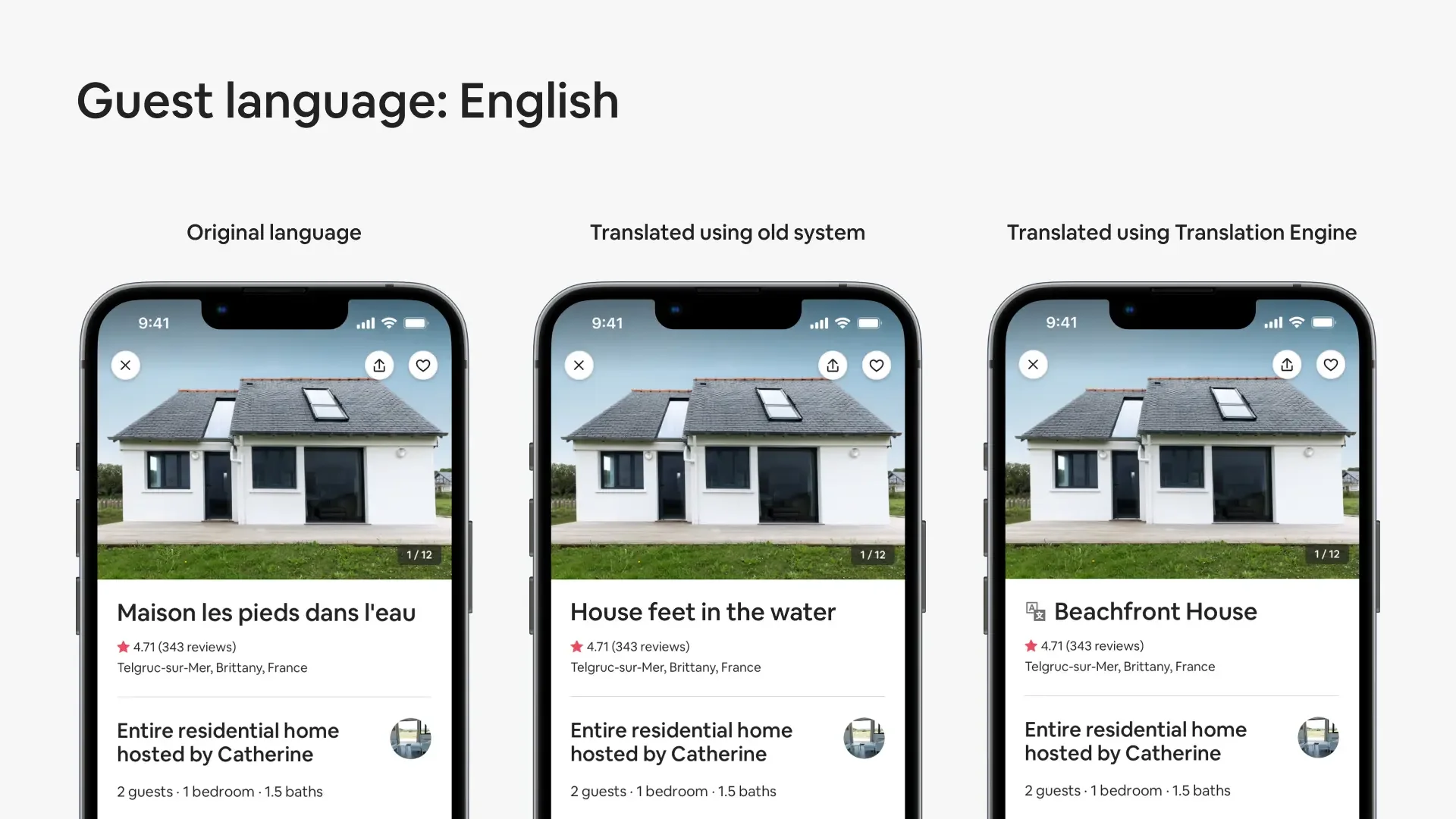
Airbnb’s AI-supported localisation translation drive- “Translate Engine“
(3) Human Judgment and Cultural Context
As automation expands, over-reliance becomes a potential risk.
"If efficiency and authenticity work together, there's no tension. But if we overuse AI, then that's when the problem starts." — Bharat Nagpal
Human-in-the-Loop Operations: Platform operations require a hybrid model. Non-generative machine learning handles routine tasks like tracking flight delays, but complex policy disputes, force majeure events, and non-cancellable negotiations demand human customer service representatives.
Narrative Authenticity & Localisation: While AI excels at digital media buying and first-pass drafting, destination storytelling requires human judgment to avoid generic, homogenised content. Enterprise models must be trained on context-specific regional languages rather than direct translations to capture natural tone and cultural nuances.
(4) Intent Targeting & SME Enablement
With the increased competition and complexity brought by non-travel entities entering the industry and increased adoption of AI across the decision-making process, marketing frameworks are undergoing major shifts:
Intent-Based Precision: Marketing is moving from broad demographic segmentation to real-time intent targeting. Utilising first-party transactional data allows platforms and DMOs to target "in-market" travellers actively searching for flights or lodging, enabling real-time arrival recommendations that drive secondary destination spend.
Recognition over Repetition: Future travellers expect algorithmic recognition rather than message repetition. AI systems must recognise current booking statuses to avoid serving redundant ads and accurately anticipate trip context (such as family vs. solo travel) while strictly respecting regional data privacy regulations.
Democratising Data for SMEs: Generative AI allows SMEs to access complex data analytics through natural language queries without dedicated machine learning teams. To bridge budget gaps, public-private models should consider deploying catalytic funding—such as Sarawak's Tourism Online Ecosystem Fund (offering up to RM 5,000 for digital and AI adoption) to ensure the industry progress inclusively.
3. Decentralised Infrastructure & Smart Transit Networks
To keep pace with shifting demand patterns, Regional travel infrastructure is moving toward decentralised networks that enhance connectivity and elevate transit into an experiential feature.

Taiwan Railway’s Haifeng train. Photo: Taiwan Railway Corporation
Multi-Airport Commercial Hubs: Secondary commercial centres are expanding multi-airport networks to manage decentralised passenger traffic.
Experiential Transit Modes: Transit is being redesigned as a scenic product—such as Chinese Taipei's panoramic floor-to-ceiling window rail carriages tailored for social media streaming.
Self-Drive & Multimodal Rail: Expanding high-speed rail networks and electric vehicle adoption across China, Japan, Korea (ROK), Thailand, Vietnam, Australia, and more are shifting choices away from short-haul flights.
These shifts in consumer behaviour, technology, and infrastructure point to a broader transformation across the Asia-Pacific tourism landscape. Yet adapting to this changing landscape requires more than meeting evolving demand or adopting new technologies. It calls for stronger partnerships, purposeful destination development, and tourism models that create lasting value for host communities.
