
From Safety to Money: Forces Reshaping Traveller Choices
As the Asia Pacific region continues to navigate the complexities of tourism recovery and growth, a range of dynamic forces is reshaping the landscape. Political instability, economic pressures, and rapidly evolving traveller expectations are driving shifts in motivations and preferences. To plan effectively for the future, destinations and businesses need to take the time to understand how geopolitical developments influence travellers’ choices.
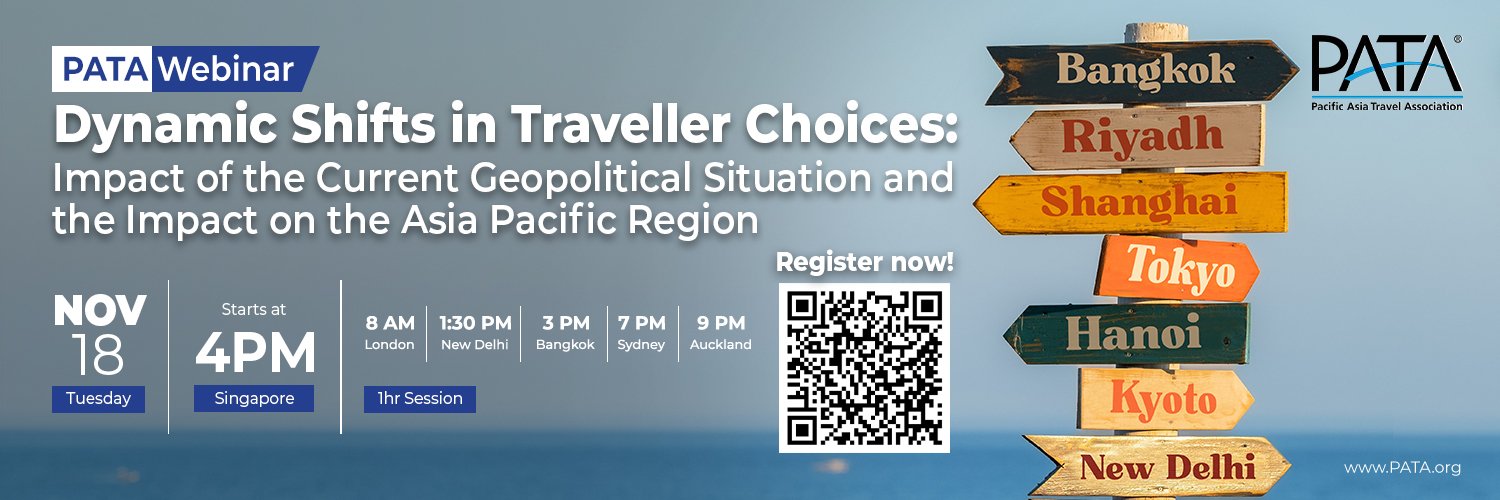
In a recent PATA webinar, Simon Moriarty, VP of Syndicated Research at MMGY Global, unpacked the latest insights on global traveller behaviour, covering key trends and opportunities for destinations to navigate global uncertainty and changing traveller behaviour successfully.
This article presents data-driven insights and expert perspectives from the Dynamic Shifts in Traveller Choices webinar, with a sharp focus on three key factors impacting Asia Pacific travel today.
Geopolitics and Perceptions of Safety

Over the years, political stability concerns have begun to play a key role in essential traveller choices, influencing where they want to go, what activities they look forward to, and even the choice of travel companions. The following are a few key findings of how geopolitics and safety concerns have increasingly become important considerations:
Political stability and safety are non-negotiable.
Data shows that 7 out of 10 American travellers believe that personal safety related to the destination's stability influences their travel plans, a noticeable increase from 65% of respondents in 2024.
Economic headwinds determine where and how far people can go.
Over half of American and European travellers share concerns that economic factors, such as inflation, are impacting their travel choices. Millennial travellers, especially, tend to be more sensitive about safety and economic standing when choosing destinations and travel companions. Meanwhile, Gen Z travellers exhibit a more stable attitude towards risks, often prioritising experiences and self-expression in their travel plans. These insights remind marketers that travel motivations differ across generations—and the importance of delivering the right messages to the right audience.
Learn more about how political climate, inflation, and job security affect travellers today>
Evolving Consumer Choices
Alongside geopolitics, shifts in consumer values and expectations are reshaping what travellers seek and what they avoid in their travel plans.

The Rise of Sustainability & Eco-Conscious Choices
Whether it is about sustainable aviation fuel, eco-friendly practices of hotels, waste management, and the like, travellers have turned to adopt eco-conscious considerations. For example, data shows that around 1/3 of European travellers avoided a destination or transport option because they felt it was not committed to sustainable practices.
Find out more how perceptions toward sustainable practices of brands and organisations influence people’s travel choices>

A Desire for Authenticity
With a growing consciousness for sustainable travel experiences, consumers are seeking authentic experiences, such as the ability to connect with local communities. Through this desire, coupled with the heightened ability to discern and filter content, travellers are increasingly questioning the authenticity of influencers, turning to relatable figures that provide genuine and attainable experiences. Hear more about the big shift from large-scale public figures or celebrities to micro-influencers>
Emerging Behavioural Trends
While people continue to exhibit strong wanderlust for new experiences, how people prepare for travel has changed.

Personal Finances are in the spotlight
More than half of North American travellers’ choices are strongly influenced by their respective financial situations.
Amidst a time of uncertainty and economic challenges brought by inflation, consumers have increasingly changed their spending habits to align with their budgets, leading to an interest in domestic travel or better-value destinations, shorter stays, or travel during off-peak season.

Off-Peak Season is In
Most travellers from India, North America, and Europe share a preference for off-peak travel or lesser-known destinations, avoiding scenarios of overcrowding. This trend creates opportunities for seasonal campaigns, seeing a growing market of travellers who want to unplug and relax from busy crowds.
Discover how these factors, and more, influence travellers from different markets>
The Age of AI
AI and digital tools are increasingly used to address the “boring parts” of planning a vacation—searching, comparisons, figuring out transportation, making itineraries, and more. This poses a challenge for tour operators to highlight the importance of human expertise in creating and planning authentic travel itineraries. To best approach this change, tourism professionals and businesses should strike a balance between the roles of technology and human expertise to streamline efficient services. Hear more>
What This Means for the Future of Asia Pacific Travel
Across these three forces—geopolitics, changing behaviours, and emerging trends, this stands out: Travellers are becoming more conscious about sustainability & value, expect authentic experiences, and are still eager to explore.
This creates strong opportunities for Asia Pacific destinations to align strategies with these key forces driving change in the region. Take a closer look at how key Asia Pacific destinations—namely China, India, and Japan—are affected by these shifts>
Watch the full webinar recording right here: Dynamic Shifts in Traveller Choices: Impact of the Current Geopolitical Situation and the Impact on the Asia Pacific Region.
This webinar complements the PATA Issues and Trends Report of the same name, Dynamic Shifts in Traveller Choices: Impact of the Current Geopolitical Situation.
PATA Members can download the complimentary copy from Info Hub. The report can also be purchased on the PATA Publication page.
