
Travel & Tech Asia 2026 Panel Discussion
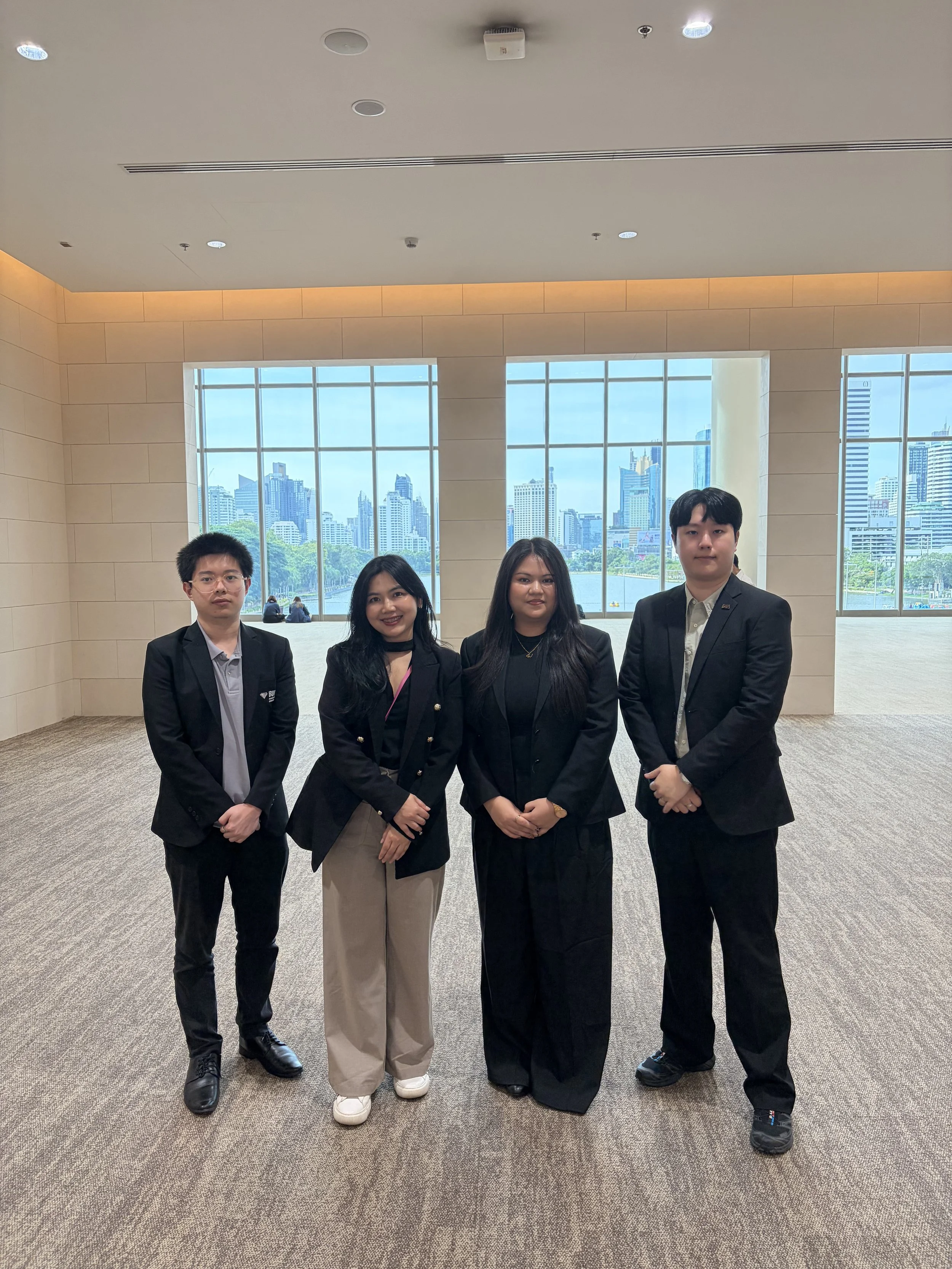
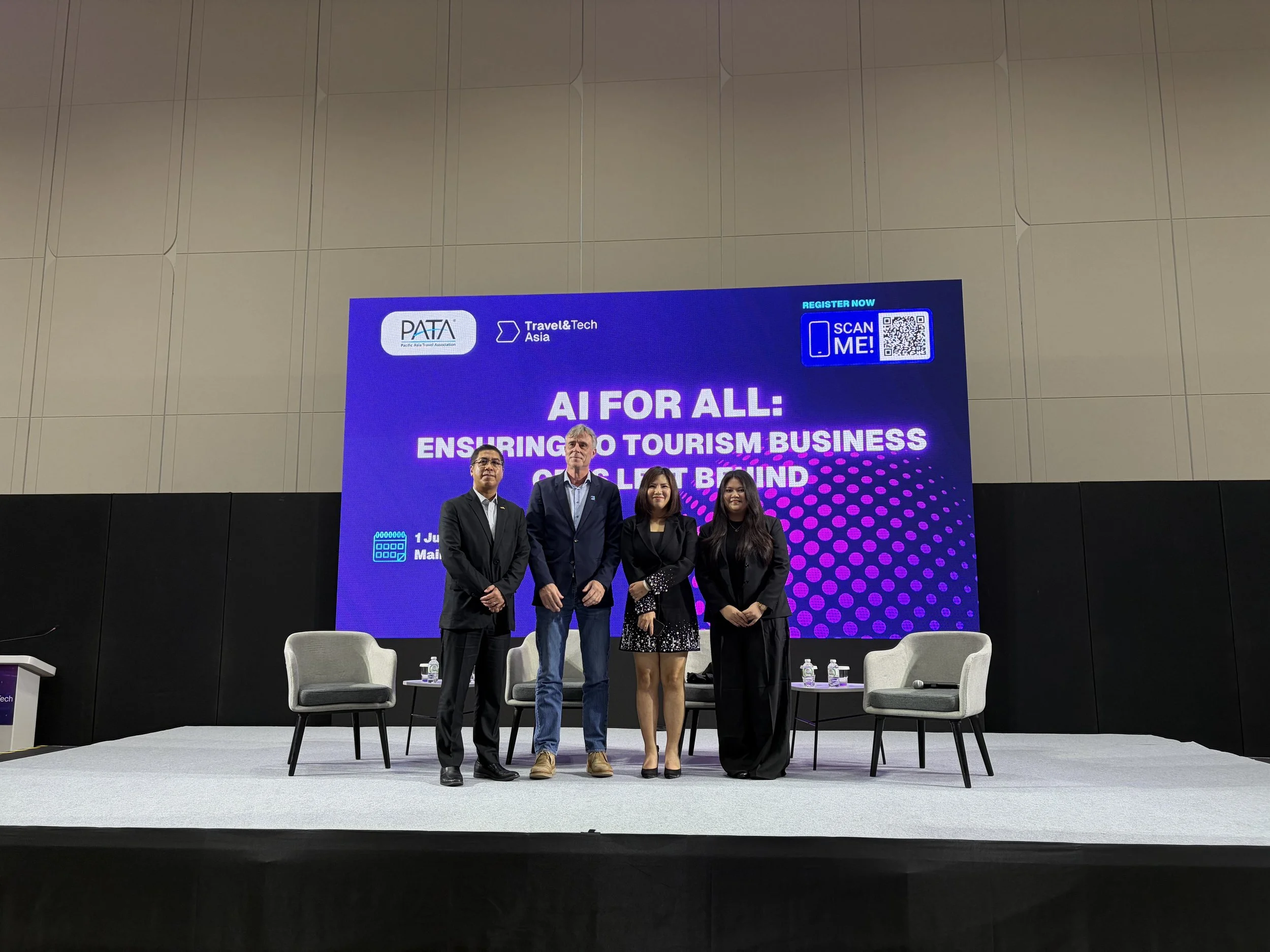
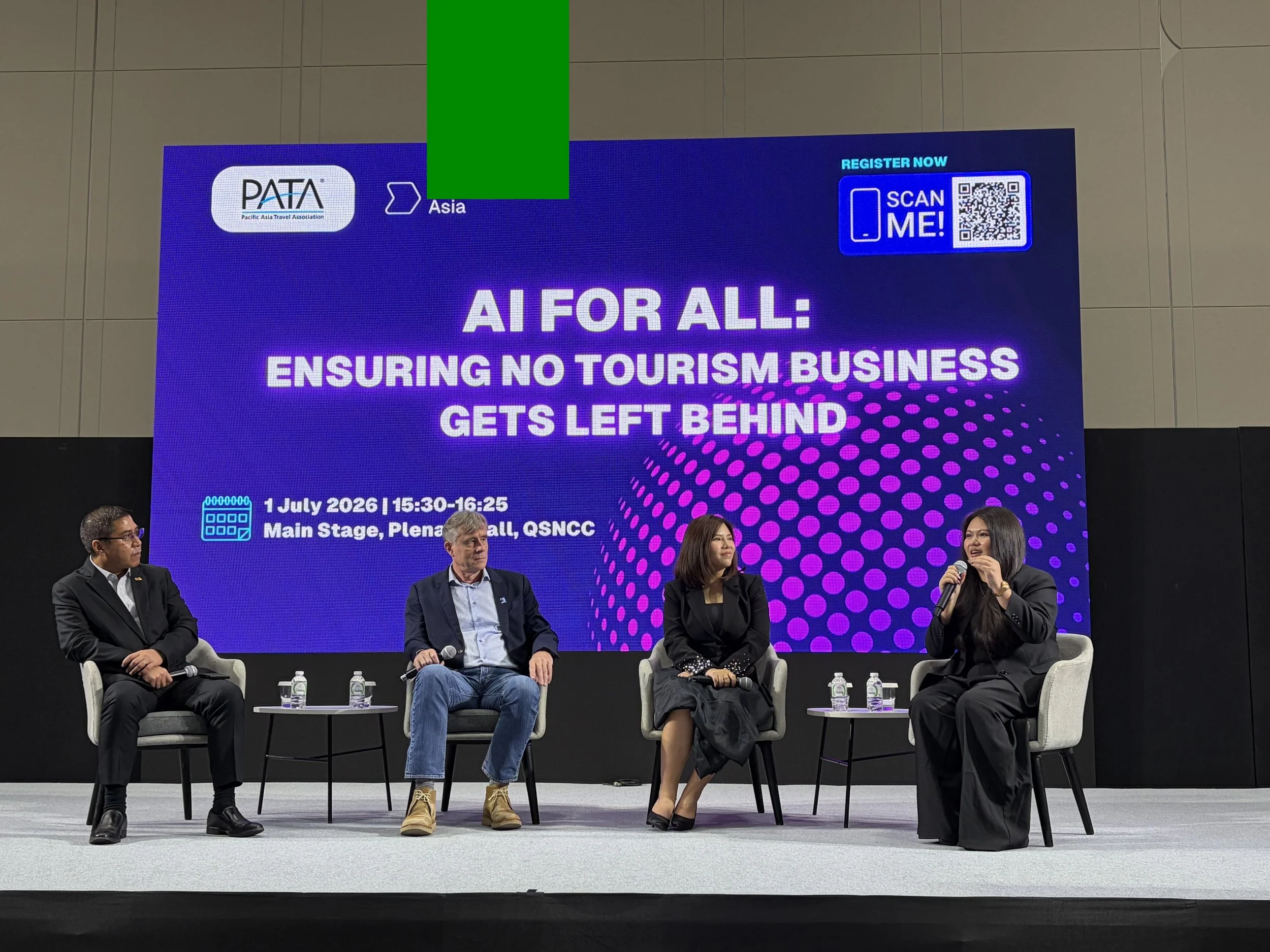
Bangkok, Thailand, 1 July 2026 - The PATA Thailand Bangkok University Student Chapter proudly participated in Travel & Tech Asia 2026, held at the Queen Sirikit National Convention Center (QSNCC), Bangkok. Representing the voice of the next generation of tourism professionals, our Student Chapter was invited by the Pacific Asia Travel Association (PATA) to join the panel discussion titled "AI for All: Ensuring No Tourism Business Gets Left Behind." The session brought together leaders from industry, academia, and youth to discuss the practical role of Artificial Intelligence (AI) in shaping the future of tourism and hospitality.
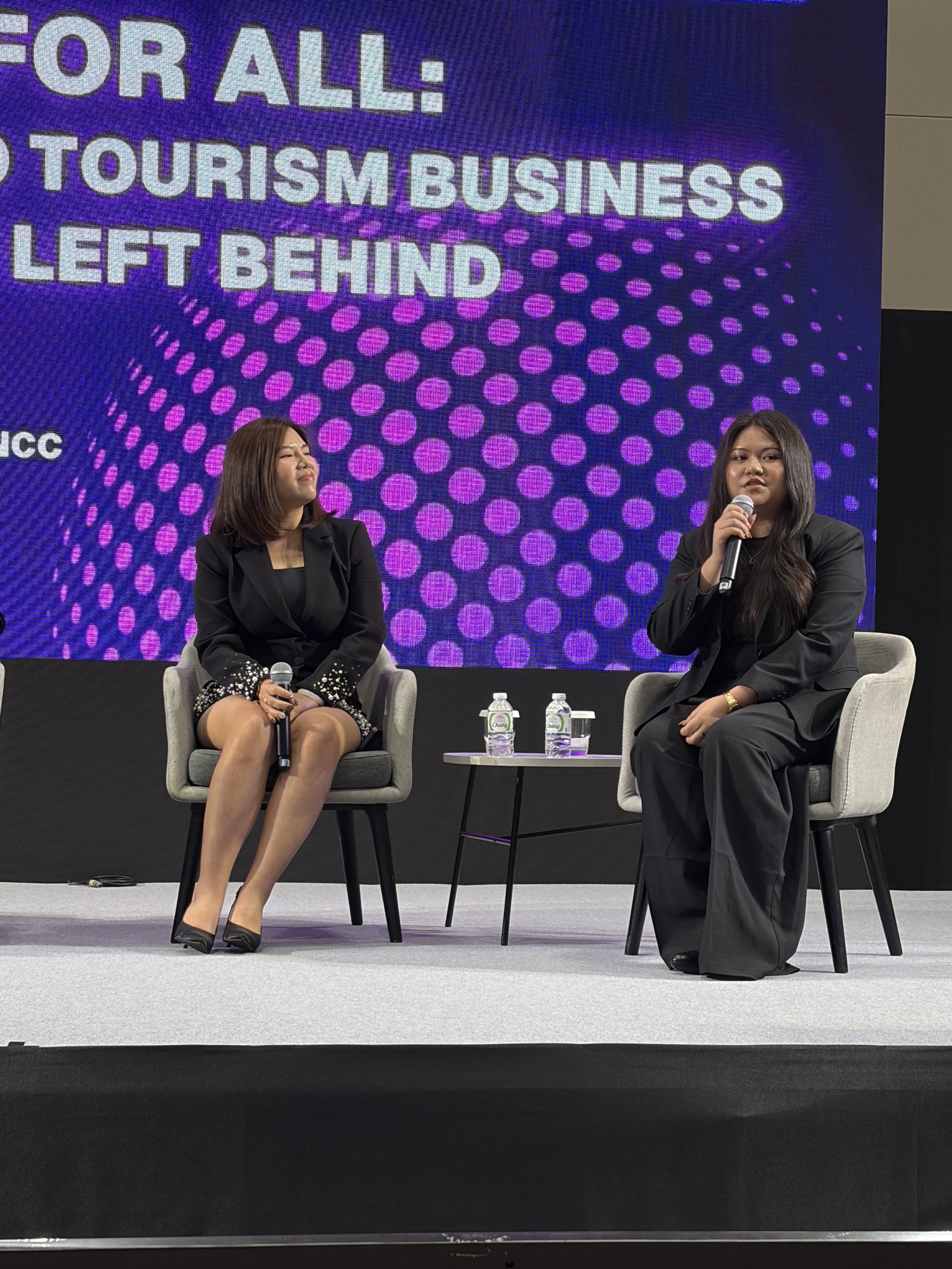
The panel discussion was moderated by Paul Pruangkarn, Director of Marketing & Communications at PATA, and featured distinguished speakers including Willem Niemeijer, Founder & CEO of Khiri Travel, Panicha Panpat, Associate Dean of the Faculty of Hospitality Management at Dusit Thani College, and Thazin Wint Htal, representing the PATA Thailand Bangkok University Student Chapter.
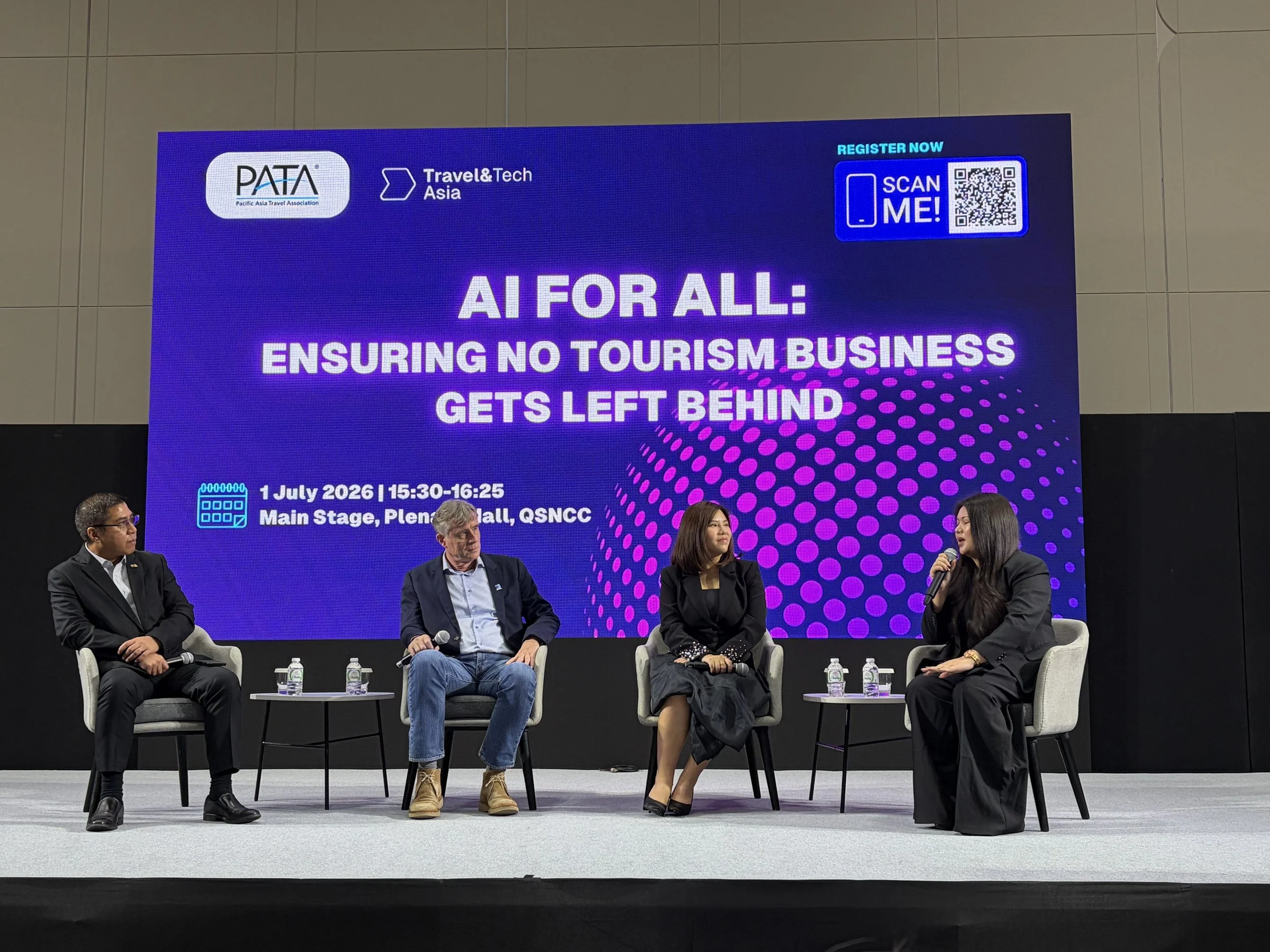
Panel Discussion Overview
The session explored how Artificial Intelligence has evolved from an emerging trend into a practical business necessity across the tourism industry. Rather than focusing solely on technological innovation, the discussion emphasized how AI can be implemented responsibly to improve operational efficiency, enhance customer experiences, and support sustainable business growth for tourism organizations of every size.
Throughout the discussion, the panel examined practical AI applications currently creating value within the tourism sector, including customer communication, marketing support, content creation, workflow automation, data analysis, and personalized travel experiences. The conversation also highlighted that AI should be viewed as a tool that complements human capabilities rather than replacing the authentic hospitality that defines the tourism industry.
A key focus of the discussion was ensuring that small and medium-sized tourism enterprises (SMEs) are not left behind in the digital transformation. Panelists shared practical approaches for adopting accessible and affordable AI solutions, demonstrating that organizations can begin their AI journey by addressing everyday operational challenges without requiring significant financial investment.
The panel further explored the future tourism workforce and the evolving role of education. The discussion emphasized that while digital literacy and AI competency are becoming increasingly important, future professionals must continue developing human-centered skills such as communication, empathy, creativity, adaptability, critical thinking, and ethical decision-making. Educational institutions were encouraged to integrate AI literacy with practical industry experience to better prepare graduates for the changing tourism landscape.
Representing the student perspective, our Student Chapter shared how students are already utilizing AI in their academic and personal lives to support research, brainstorming, presentation preparation, language learning, and information analysis. The discussion also highlighted that students view AI as a learning companion rather than a replacement for independent thinking, while emphasizing the importance of responsible AI usage, critical evaluation of information, and continuous learning.
One of the central themes throughout the session was balancing technological advancement with authentic hospitality. The panel agreed that while AI can streamline operations and improve efficiency, genuine human interaction remains essential in creating meaningful travel experiences. AI should therefore be adopted to empower tourism professionals, allowing them to dedicate more time to personalized service and guest engagement.
Following the panel discussion, the event continued with the official opening ceremony of Travel & Tech Asia 2026, where PATA Vice Chair Ben Montgomery delivered the opening address to officially launch the summit.
Key Discussion Highlights
The panel identified several key priorities for the future development of AI within the tourism industry:
Recognizing AI as an essential business capability rather than simply an emerging trend.
Encouraging tourism organizations to adopt accessible AI solutions that create measurable business value.
Supporting SMEs in beginning their AI journey through practical, cost-effective implementation.
Preparing future tourism professionals with both digital competencies and essential human-centered skills.
Strengthening collaboration between educational institutions and industry to develop AI-ready graduates.
Preserving authentic hospitality by ensuring technology enhances rather than replaces meaningful human interactions.
Industry and Educational Impact
Our participation in Travel & Tech Asia 2026 provided an important opportunity for the PATA Thailand Bangkok University Student Chapter to contribute the perspectives of students and emerging tourism professionals to an international industry dialogue. By participating alongside industry leaders and educators, our Student Chapter reinforced the importance of youth engagement in conversations surrounding technological innovation and the future of tourism.
The session also strengthened connections between academia and industry, encouraging greater collaboration in preparing future professionals to navigate digital transformation responsibly while maintaining the core values of hospitality.
Conclusion
The panel discussion successfully demonstrated that Artificial Intelligence is becoming an integral part of the tourism industry's future while reaffirming that authentic human experiences remain at the heart of hospitality. Through meaningful dialogue among industry professionals, educators, and student representatives, the session highlighted practical approaches for ensuring that organizations of every size can embrace AI responsibly and sustainably.
The PATA Thailand Bangkok University Student Chapter is honored to have represented the student voice during this international forum. This opportunity reflects our continued commitment to empowering future tourism leaders through industry engagement, innovation, knowledge sharing, and meaningful collaboration. As the tourism industry continues to evolve, our Student Chapter remains committed to fostering learning experiences that prepare students to contribute confidently and responsibly to the future of global tourism.
Documentation and Media Coverage
Facebook Post:
https://www.facebook.com/share/p/194vn6bbRa/
Instagram Post:
https://www.instagram.com/p/DakkdWjE2ZB/?igsh=MWJnbjliZXEzZWo5dQ==
LinkedIn Post:
https://www.linkedin.com/posts/pata-thailand-bangkok-university-student-chapter-283b60330_pata-bangkokuniversityinte rnational-travelandtechasia2026-ugcPost-7480954002759675904-_p2i/?utm_source=share&utm_medium=member_deskt op&rcm=ACoAAEliyz8B_txCAf19lkByM_JrvNY0XfR6B1M
About PATA Thailand Bangkok University Student Chapter
The PATA Thailand Bangkok University Student Chapter empowers students through engagement with global tourism networks, industry activities, sustainability initiatives, and leadership development opportunities. Guided by the motto “Empower Youth, Save the World” and committed to the United Nations Sustainable Development Goals (SDGs), the chapter aims to cultivate future tourism leaders who contribute positively to society and the environment through meaningful action and innovation.
Student Chapter Social Media
https://bit.ly/PATABUSC_Facebook
https://bit.ly/PATABUSC_Instagram